destinations
Karahantepe
Karahantepe: a vast land with mysteries to be revealed
Discovered in 1997, Karahantepe is a 46-kilometre drive to the city centre of Şanlıurfa. First excavations on site started in 2019. Spreading on an area of 140,000 sqm, the site has more than 250 T-shaped megaliths that are easily seen on the site. These stelae, proofs of many structures carved into the bedrock, are decorated with human and animal depictions –along with various animal depictions, it is also possible to see a lot of human depictions.
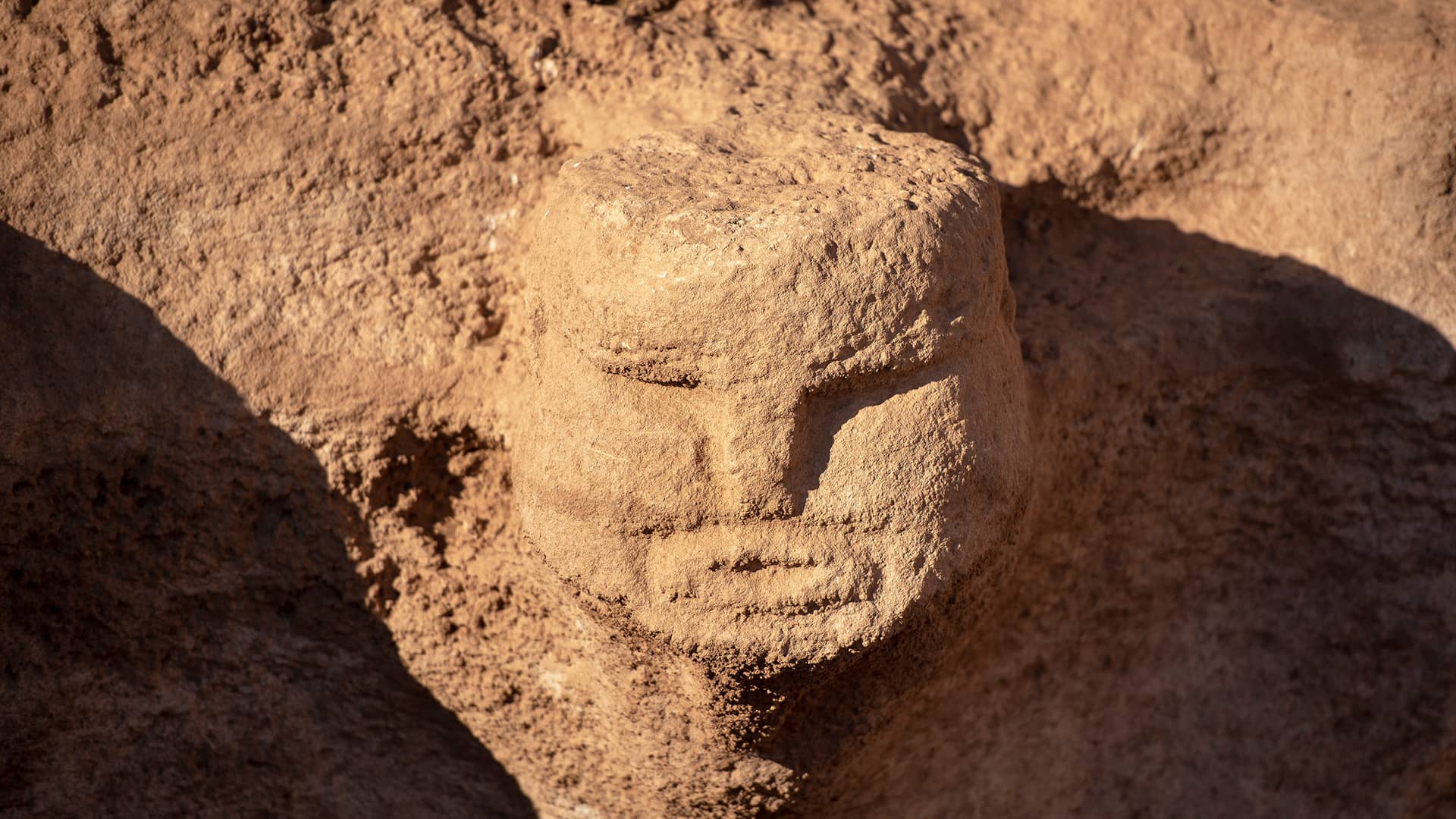
Karahantepe promises important information to solve the enigma of an unexplored era in history. Ongoing excavations at Karahantepe continue to reveal remarkable insights into the beginnings of sedentary life and early social organization. Archaeologists have uncovered a monumental public structure, approximately 28 meters in diameter, bearing similarities to an amphitheater or odeon. Human heads embedded into the walls and seated human statues found on the floor suggest that the structure served a ritual function. Fully exposed down to the bedrock, the complex also includes a striking 230-centimeter statue depicted holding its phallus, providing strong evidence that human imagery was gaining prominence in the symbolic world of the period. While animal symbolism dominated earlier phases, the discoveries at Karahantepe indicate a significant shift toward the representation of the human figure.
Additionally, excavations have brought to light the first T-shaped pillar in the area featuring an explicit human face. Its sharply defined features, deep-set eye sockets and blunt nose closely resemble other human sculptures uncovered at the site. Although T-shaped pillars have long been understood to symbolize humans, the detailed facial depiction on this example marks a unique milestone, positioning it among the earliest realistic human representations. Collectively, these distinctive finds show that Karahantepe hosts some of the most direct and sophisticated symbolic expressions of the human form in the prehistoric Near East.